

When it comes to skincare, it is easy to get caught up with what is in the market. Especially, when you are bombarded with product recommendations left and right.
Remember the days where the 10-step korean skincare routine was a thing? We were going around shopping for multiple serums and moisturisers, adding it to our collections when don’t even know what its really for. This phenomenon came up during the rise of makeup gurus on Youtube and when there were little creators on those platforms, we idolised the ones we see and believed every word they said to achieving that healthy glowing skin.
This is still very much prevalent in today’s skincare and beauty landscape. However, who has the time to apply 10 different products every night and keep up with the expenses of this lavish skincare routine in this economy?
Today, we are here to tell you how to effectively build a skincare routine (that does not require 10 steps) that is manageable to keep up with, highlighting what you really only need.
Table of Contents
Skincare does not need to be complicated
Adversely, loading up on skincare in turn leads to more problems instead of giving you that glowy skin that you want to attain. Here’s why:
- Mixing multiple products leads to more irritation. In certain scenarios, we don’t know what formulation works well with one another and we might end up creating chemical warfare on our face.
- You waste money on formulas that don’t actually work for your skin type or you’re simply buying products that counteract with one another.
- Having too many steps just makes it taxing to keep up with the routine. Staying consistent is really what you need here. Keep it simple so you won’t burn out from keeping up with an extravagant skin care regimen every day.
That being said, everything boils down to formulation, your skin type and what you wish to achieve with your skin.
3 Crucial Steps in Every Skincare Routine:
Step 1: Cleansing
The first step to every skincare routine, cleansing. Washing your face is essential when we face mass amounts of pollutants in our everyday lives. Airborne pollutants increases our vulnerability to UV damage, dryness, wrinkles formation and hyperpigmentation. Thus, this is a step we can never forgo.
Recommended actions:
- Wash your face once at the start of the day and once at night. Wash your face as the last step of your shower routine (especially if you use conditioner), right before skincare.
- Be gentle. Use slow circular motions with your finger tips to reach every corner of your face. Be especially gentle around your eyes.
- Use lukewarm water. Not hot, not cold! We do not want broken capillaries nor do we want to harm our skin barrier.
The Different Types and Formulations:
A gentle everyday cleanser will suffice for most. Look out for formulations that is safe for everyday use and/or has PH control. Depending on your skin type, there are different formulations or ingredients you can look out for.
Starting out, here are three basic types you commonly see:
- Cream Cleansers: Usually milky, creamy and has a lotion-like formula. It does not foam up and leave a light film on the surface of the skin to lock in moisture. Usually formulated with ingredients like oils, butters or glycerin. Recommended for people with dry or sensitive skin.
- Gel Cleansers: Usually clear or translucent and has a thicker consistency. It has a small amount of foam. Leaves the face feeling clean without being stripped. Perfect for people with combination and normal skin types.
- Foam Cleansers: Available in different forms where you lather the cleanser with water or pump them out already as foam. Perfect to get into pores and get rid of sebum and excess oil. Recommended for oily and acne-prone skin.
There will be different cleansers out in the market that targets different skin types and concerns. What’s ideal for you might not be ideal for everyone else. In this case, before you get overwhelmed, here are some of our suggestions as a beginner.
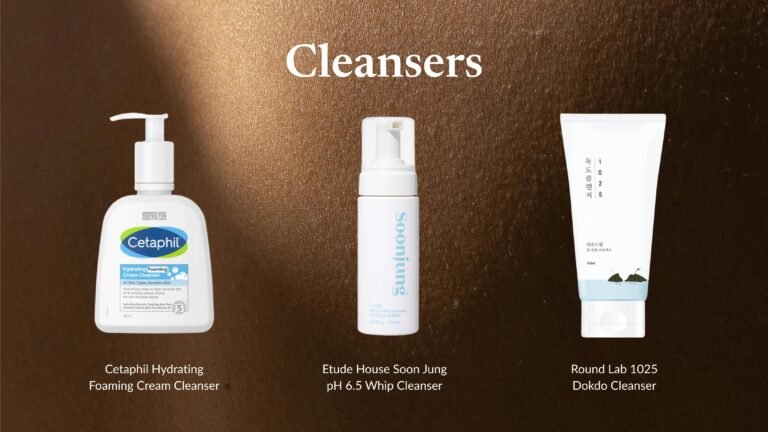
Start of with something that is gentle for everyday use and suitable for all skin type. The basic function of this is to merely cleanse the skin. Our suggestions include:
- Cetaphil Hydrating Foaming Cream Cleanser (redeem samples here)
- Etude House Soon Jung PH 6.5 Whip Cleanser
- Round Lab 1025 Dokdo Cleanser
Step 2: Moisturiser
The second most important step in every skincare routine is Moisturisers. After cleansing your face, the next step is to prevent water loss through the skin and to protect your skin barrier. Many might think that moisturisers are used only for people who have dry skin. However, everyone of all skin types will benefit from it through different functions.
Recommended actions:
- According to your skin type, pick a formulation most suitable for it
- Dispense a pea sized amount and gently distribute the product evenly by rubbing it in with your finger tips
- Avoid sensitive areas around the eyes and be especially gentle around the eyelids.
- Lastly, don’t forget the neck and ears.
The Different Types and Formulations:
Similarly, moisturisers have different formulations and functions according to ones skin type and concerns. They can be divided into 3 different categories which include:
- To prevent water loss through skin
- To add water to the skin
- To reduce visible flakes
Modern day moisturisers often include a combination of different formulations but here are the three common ingredients you might find:
- Humectants: Compounds that attract water from the environment and deeper skin layers and bind water to the skin’s surface
- Common Ingredients include: Glycerol, AHAs (Hyaluronic, Lactic, Glycolic Acid) Urea.
- Occlusives: Prevents water loss by forming a barrier on the skin.
- Common Ingredients include: Petroleum, Dimethicone, Vegetable Oils, Animal Fats also known as Lipids
- Emulsifiers: Ingredients that combine oil-based ingredients and water-based ingredients together in a single formulation
- Common ingredients include: Polysorbates, Laureth-4, Cetearyl alcohol, Glyceryl stearate
So, what kind of moisturisers should you be using?
- If you have Oily Skin, the best kinds of moisturisers are Gel moisturisers. Often they are lightweight and do not have oils in it that often clogs your pores. Look out for terms like “Oil-free”. They are usually formulated with Humectants like glycerin or hyaluronic acid.
- If you have Combination Skin, you should also look out for light-weight moisturisers that are oil-free but still hydrating enough to treat your dry/normal areas. Look out for products that have a mix of occlusives and humectants. They provide balanced hydration without clogging your pores.
- If you have Sensitive Skin, you’ll need to look for something that is fragrance-free and have skin barrier repairing ingredients like ceramides (lipids) and hyaluronic acid. Avoid harsh chemicals and alcohol
- If you have Normal Skin, you are generally okay to use any sort of moisturiser, however, pick something that is lightweight that helps protect your skin’s protective barrier. Take into consideration how hot Singapore’s weather is as well and go for something that does not make your face feel sticky.
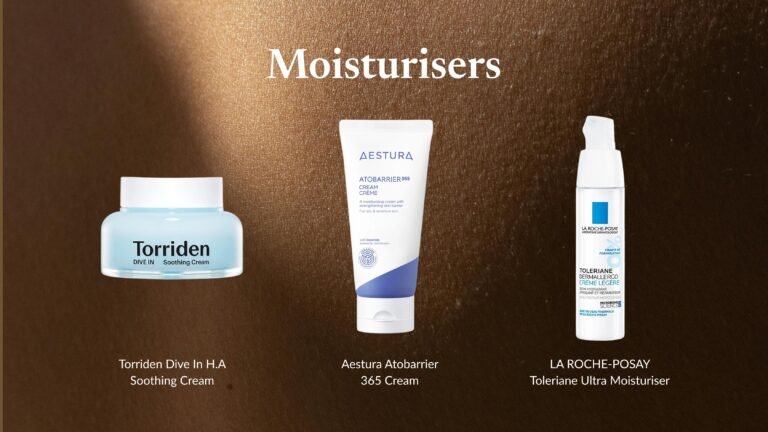
Moisturisers on its own is a huge topic that we can go on and on about. However, here are some recommendations we could start you off with:
- Torriden Dive In H.A Soothing Cream
- Aestura Atobarrier 365 Cream
- LA ROCHE-POSAY Toleriane Ultra Moisturiser
Tip: “Cream” traditionally refers to a product containing more occlusive ingredients, whereas a “lotion” primarily contains humectants.
Step 3: Sunscreen
The last on the least, which is also the most important step in our Hot and humid Singapore, is Sunscreen. This is the step that we should never skip a day, whether we are indoors or if it is a gloomy day. It protects our skin from harmful UV rays and free-radicals that are often the number one reasons for dark spots and blemishes. This category of product definitely deserves an article on its own but here’s the TLDR.
Recommended actions:
- Dispense product on three fingers – index, third and forth. (This is how much product you should be applying to your face and neck)
- Rub them in between your hands and evenly distribute this all over the face not missing the eyelids, ears and neck.
- Rub product in until white cast disappears (depending on the sunscreen you use)
The Different Types and Formulations:
- Physical Sunscreens: Also known as Mineral sunscreens that contain yes, minerals like titanium dioxide or zinc oxide. These block and scatter the UV rays before it hits our skin.
- Chemical Sunscreens: Sunscreens that make use of chemicals like Oxybenzone, avobenzone, octinoxate, just to name a few. These chemicals works by absorbing the UV rays.
- Combination Sunscreens: These are sunscreens that are mix of both mineral and chemical properties. Which are more commonly found on the shelves today.
What our SingHealth recommends is that if you have sensitive skin, choose a physical sunscreen as chemical sunscreens have a higher risk of contact allergy. As for formulation, in our Singapore heat, it is best to wear something light-weight, non-sticky and water resistant. Especially for those of you who sweat buckets daily. Of course, stick to ones that for SPF 50 and above and reapply regularly for best use.
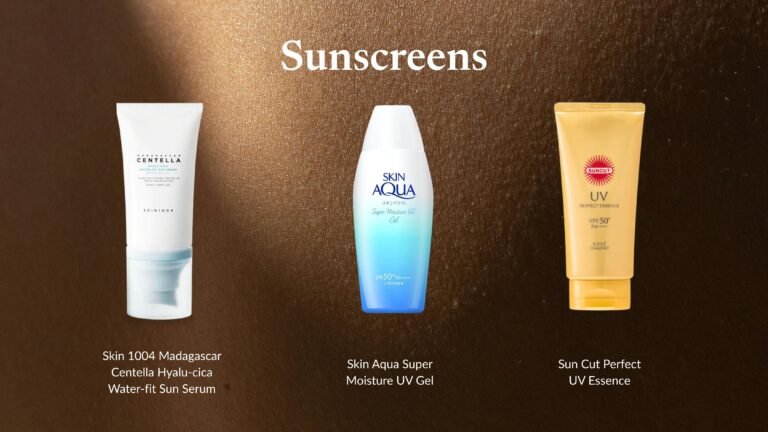
Obviously, we will come up with an article that talks more about sunscreens and their formulations but here are three we think you can start off with:
- Skin 1004 Madagascar Centella Hyalu-cica Water-fit Sun Serum
- Skin Aqua Super Moisture UV Gel
- Sun Cut Perfect UV Essence